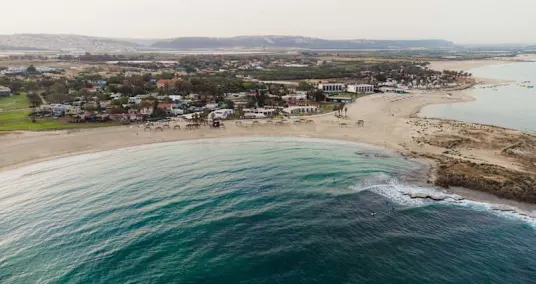
The discovery was made in an ancient shipwreck in the Dor Lagoon near the Carmel Coast, where archaeologists recovered nine pieces of unprocessed iron known as “blooms.”
Researchers from the University of Haifa said Wednesday that an underwater excavation off Israel’s northern Mediterranean coast uncovered what they described as the earliest known cargo of raw iron transported by ship, dating back around 2,600 years, Xinhua reported.
The discovery was made in an ancient shipwreck in the Dor Lagoon near the Carmel Coast, where archaeologists recovered nine pieces of unprocessed iron known as “blooms.” According to the university, the find provides direct evidence of how iron was transported in its earliest commercial stages.
The material was preserved in its original form, having solidified directly in a smelting furnace without undergoing forging or further refinement. Researchers said this distinguishes the cargo from later iron artifacts that typically show signs of shaping or tool-making.
Unlike copper and bronze, which could be melted into liquid form in ancient production processes, iron was heated with charcoal to produce a solid, porous mass. That mass was generally hammered to remove impurities and create denser material suitable for tools and implements.
The recovered blooms showed no indication of that secondary processing stage, suggesting they were transported immediately after production.

Earliest iron shipment discovered in ancient Mediterranean wreck
To determine the age and condition of the cargo, researchers conducted microscopic and chemical analyses.
Radiocarbon dating was also carried out on charred wood embedded in one of the pieces, helping confirm the timeline of the shipment. The findings were published in the journal Heritage Science.
Researchers said the cargo indicates that iron was being moved in raw form from production sites to other locations for further processing, pointing to a level of specialization in ancient manufacturing and trade networks in the Mediterranean.
The University of Haifa said the discovery provides new insight into early iron production and distribution practices in the region.
LATEST POSTS
- 1
 Investigating the Financial History of the World: A Succinct Outline
 - 2Grammy nominations 2026: Full list of nominees in every major category, including Album of the Year and Best New Artist
- 3Australia PM tries to reassure public as panic buying sees fuel demand surge 400% in some regions
- 4Figure out How to Amplify the Resale Worth of Your Kona SUV
- 5Flu season is just beginning, but doctors are already on high alert





- Why More Couples Are Choosing Africa For Their Honeymoon
- Palestinian infant freezes to death in Gaza as Israel keeps blocking aid
- Which sandwich do you find totally delectable? !
- Lawsuit claims ChatGPT exacerbated man's delusions leading to murder-suicide
- Virtual Domains d: A Survey of \Inundation and Ongoing interaction Mechanics\ Computer game
- Vote In favor of Your Favored Pizza Cover
- NASA says Maven spacecraft that was orbiting Mars has gone silent
- Practice environmental safety in Style: Divulging Famous Electric Vehicle Brands
- Select Your Cherished Fish