Iranian missile attacks on Israel struck several locations in the greater Tel Aviv area on Thursday morning, according to the Israeli military.
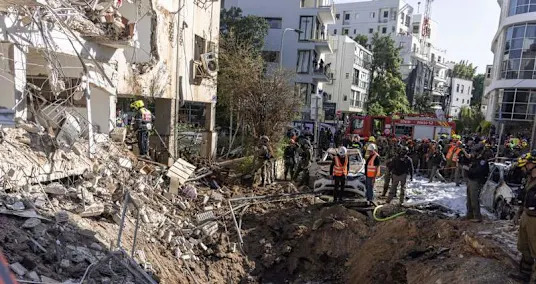
Six people were injured in the predominantly Arab town of Kafr Qasim, east of the coastal city, Israel's Magen David Adom emergency service said.
Emergency crews arrived within minutes of the impacts and found significant damage to a building, with injuries caused by the blast wave, a medic said. The wounded were treated at the scene before being taken to hospital.
Additional rocket fire targeting the Tel Aviv area was reported from Iran as well as from Lebanon overnight, according to local media.
Iran fired five waves of missiles towards Israel over the course of some two hours on Thursday morning, according to military sources.
Sirens sounded in numerous areas of Israel, including the Tel Aviv area, Jerusalem and the north of the country, with impacts reported in several locations, according to the army and emergency services.
LATEST POSTS
- 1
 The Best Games On the planet
 - 2Luigi Mangione‘s lawyers say Bondi’s death penalty decision was tainted by conflict of interest
- 3Google to Use Natural Gas to Power Massive Data Center in Texas
- 4Brazil's ex-president Bolsonaro operated on for hernia
- 5Why is everyone talking about Paul Dano? George Clooney becomes the actor's latest defender in this 'time of cruelty.'




- True serenity: Investigating Emotional well-being and the Advantages of Contemplation
- Woman gives birth on roadside after hospital allegedly sent her home: Family
- Italy's Beloved Trevi Fountain Hides A Unique Secret That Can Be Explored Underground
- Top 15 Online Entertainment Stages for Individual Marking
- A whale stranded at a Baltic Sea resort has swum off a sandbank. But it isn't safe yet
- The most effective method to Integrate Compact disc Rates into Your Retirement Arranging
- A mom's viral post is raising the question: Do kids need snacks? Dietitians have answers.
- Artemis II live updates: NASA's historic moon mission set to make lunar flyby today
- 'Euphoria' Season 3 trailer includes Eric Dane's final appearance, Jacob Elordi and Sydney Sweeney at the altar and Zendaya's 'Breaking Bad' era