When you buy through links on our articles, Future and its syndication partners may earn a commission.

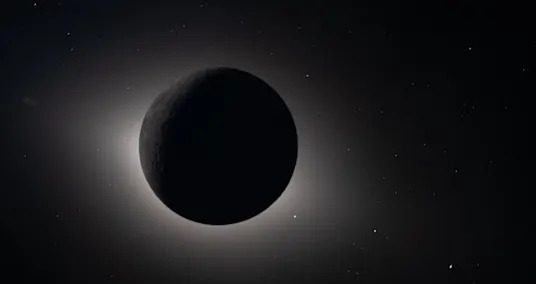
NASA's Artemis 2 astronauts have witnessed one of the rarest sights in spaceflight history — a total solar eclipse from beyond the moon.
The event unfolded yesterday (April 6) as the Orion spacecraft looped around the far side of the moon. This trajectory placed the crew in the right place at the right time to see the moon completely block the sun for about 53 minutes, which is far longer than the maximum period of totality for eclipses seen from Earth.
But it wasn't just the duration that made this eclipse extraordinary; it was the view.
NASA astronaut Victor Glover described the scene unfolding as the sun vanished behind the lunar disk.
"This continues to be unreal. The sun has gone behind the moon and the corona is still visible. It's bright and creates a halo almost around the entire moon," Glover said.
As darkness fell, another phenomenon quickly emerged. "When you get to the Earth side, the earthshine has already shown … almost seconds after the sun sets behind the moon, you can see earthshine," he added.
From Orion's windows, the crew was able to make out the faint glow of sunlight reflected off Earth, while stars and planets appeared in the background. The moon itself became a stark silhouette: "This black orb out in front of us," as Glover described it, edged by the glowing solar corona.

Though a rare sight, it's not the first time a solar eclipse has been viewed from lunar realms. The Apollo astronauts, who orbited the moon rather than flew by it (as Artemis 2 did), also saw solar eclipses, NASA's Kelsey Young, Artemis science flight operations lead, said during a press conference on Saturday (April 4).
The eclipse marks just one highlight in an already historic mission. Artemis 2 is the first crewed journey to the moon since Apollo 17 and has already set a new distance record for human spaceflight.
Following their impressive lunar flyby, the astronauts are now heading back toward Earth and are expected to splashdown on Friday (April 10) off the coast of San Diego.
LATEST POSTS
- 1
 See tonight’s solar storm unfold across the world
 - 2College students are now slightly less likely to experience severe depression, research shows – but the mental health crisis is far from over
- 3Famous Rough terrain Vehicles for 2024
- 4Kate Middleton and Prince William unveil annual family Christmas card photo with George, Charlotte and Louis
- 5Smuggler who called migrants 'chickens' jailed



- China Just Got Another Cheap EV America Would Love to Have
- Giant ‘toothed’ birds flew over Antarctica 40 million to 50 million years ago
- Investigating Inside Plan and Home Style: Change Your Residing Space
- Help Your Efficiency with These Work area Updates
- The Best Games On the planet
- Investigating Remarkable Espresso Flavors: Upgrade Your Day to day Blend
- The Secret Destinations Amex Says Will Be More Popular Than Bali by 2026
- Instructions to Improve Your Mental Exploration with Cutting edge Measurements
- Don't miss Jupiter shining close to the waning gibbous moon on Dec. 7