Protests took place in Tel Aviv, Jerusalem, Haifa, and Beersheba, as a survey found broad but uneven support among Jewish Israelis for Operation Roaring Lion.
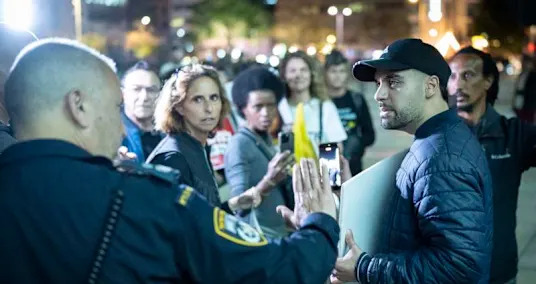
Israel Police arrested 21 anti-war protesters Saturday night as demonstrations against the conflict with Iran expanded in multiple cities despite restrictions on public gatherings.
Protests took place in Tel Aviv, Jerusalem, Haifa, and Beersheba, with hundreds of participants reported in Tel Aviv and Jerusalem and about 100 in Haifa, marking the largest turnout since weekly demonstrations began. Authorities said 13 people were arrested in Tel Aviv and eight in Haifa.
Police said the gatherings were not approved under Home Front Command regulations that ban events with more than 50 people. Officials said the increase in turnout followed calls by groups opposing the government to protest despite the restrictions.
“During a situation assessment that took place at the scene with a Home Front Command representative… it was clarified that there was a real risk to human life and accordingly, Yarkon [precinct] police commander Tzachi Sharabi ordered the gathering to be dispersed,” police said.
Hadash-Ta’al chairman Ayman Odeh, an Arab lawmaker involved in the protests, criticized the police response, calling officers fascists “in the service of the government” and saying they were afraid of “the heroic citizens who went out, despite everything, to make their voice heard.”

Survey shows broad, uneven support for war
The demonstrations come as a March 2026 survey by the Israel Democracy Institute found broad but uneven support among Jewish Israelis for Operation Roaring Lion. Support was strongest on the Right at 87% and about half on the Left.
The survey also found that Jewish and Arab respondents largely agreed that Iran’s resilience has been stronger than expected. Most Jewish respondents said Israeli society could sustain the campaign for up to one month, while 28% said as long as needed. Arab respondents were less optimistic about how long the public could endure the conflict.
A majority of Jewish respondents said Prime Minister Benjamin Netanyahu’s decision was driven by security considerations, while most Arab respondents viewed it as political.
LATEST POSTS
- 1
 Sea Ice Hits New Low in Hottest Year on Record for the Arctic
 - 2Most loved Road Food: Which One Prevails upon You?
- 3Whale stranded off Germany for days found stuck again
- 4Rediscovering Imagination in Adulthood: Individual Creative Excursions
- 5Iran's stolen futures: The arrested Iranians at risk of execution by the regime





- Book excerpt: "Enough" by Dr. Ania Jastreboff and Oprah Winfrey
- Aspirin can prevent a serious pregnancy complication — but too few women get it, new report suggests
- Must-Have Wellness Gear: What to Purchase for Successful Exercises
- Raw oysters linked to ongoing salmonella outbreak infecting 64 across 22 states: CDC
- Exploring ways to reduce the impact of space junk on Earth
- Struggling to keep your New Year's resolutions? Here's how to keep yourself on track
- Moscow: Russia well-positioned to withstand oil market shocks
- Former Peruvian President Pedro Castillo sentenced for conspiracy
- US FDA investigates Takeda's blood disorder drug after pediatric death